Empreintes
L’empreinte révèle l’action du corps dans sa forme la plus primitive. En répétant le geste, le corps s’émancipe de toute volonté. La paume de la main, la pulpe des doigts ou le talon portent l’intention et déposent une écriture : un langage par contact. Le corps marque son passage de façon archaïque. C’est une trace du mouvement, un sentier que la peinture blanche retranscrit sans ornement ni prétention.
L’abandon de moyens participe à l’abandon de soi, le bruit se réduit pour laisser l’empreinte se former en silence. En jouant à la frontière du rien, le peintre et son mouvement tendent une ligne entre ce qui est et ce qui devient. S’instaure un premier dialogue avec la peinture, une exploration mutuelle pour
s’appréhender et s'apprivoiser.
Sur la toile, le geste dénudé se mue en impulsions répétées, en variations spontanées. Les peintures se répondent et se décalent, tissant un territoire. Un rythme d’ensemble soutient les perceptions intimes à chaque regard.
Imprints
the noise is reduced to let the imprint form in silence. Playing on the frontier of nothingness, the painter and his movement draw a line between what is and what is becoming. A first dialogue is established with the painting, a mutual exploration to understand and interact. On the canvas, the bare gesture is transformed into repeated impulses and spontaneous variations.
The paintings respond and shift, weaving a territory. An overall rhythm supports intimate perceptions at every glance.
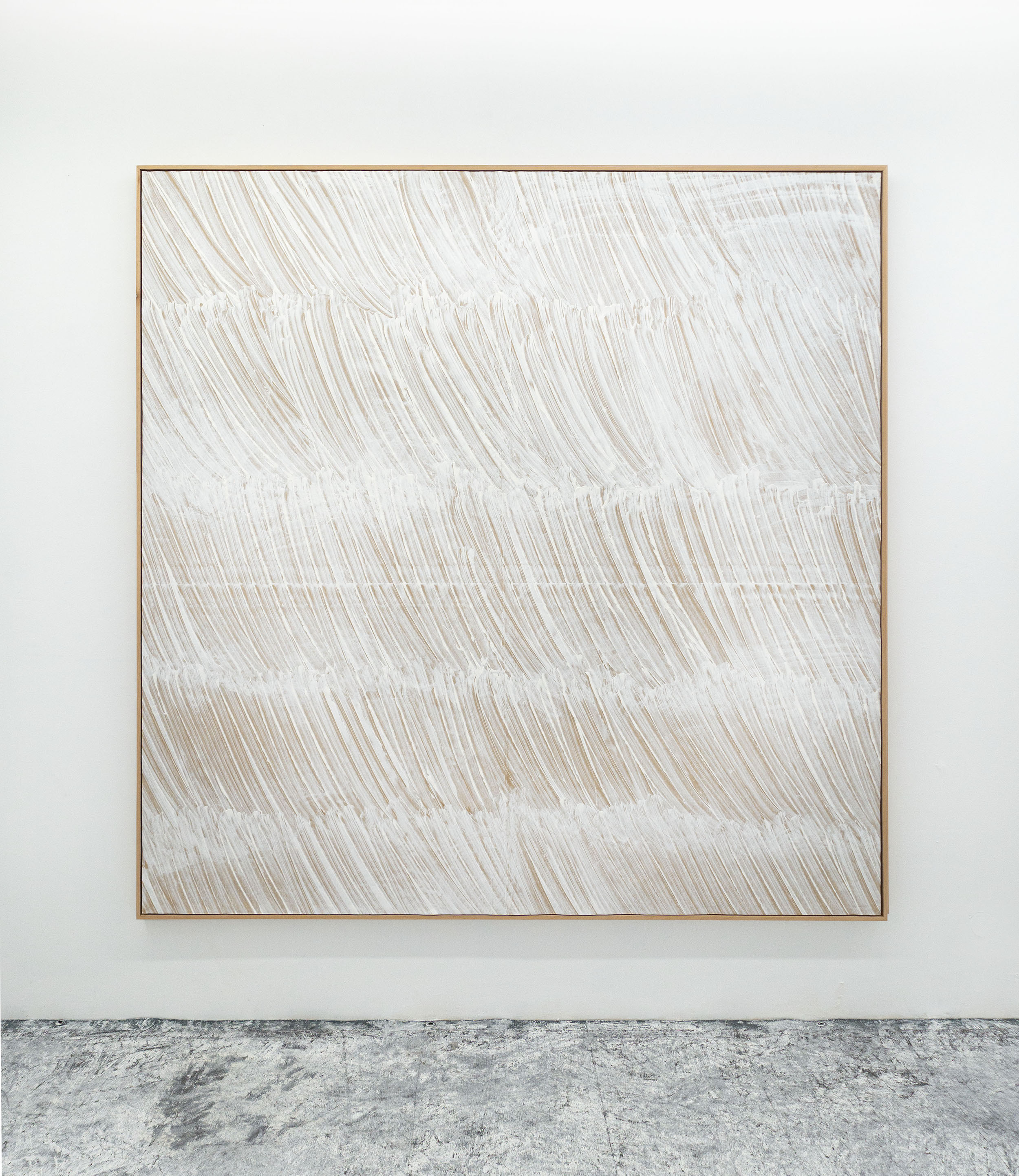
Acrylique sur kraft : 200 x 200 cm
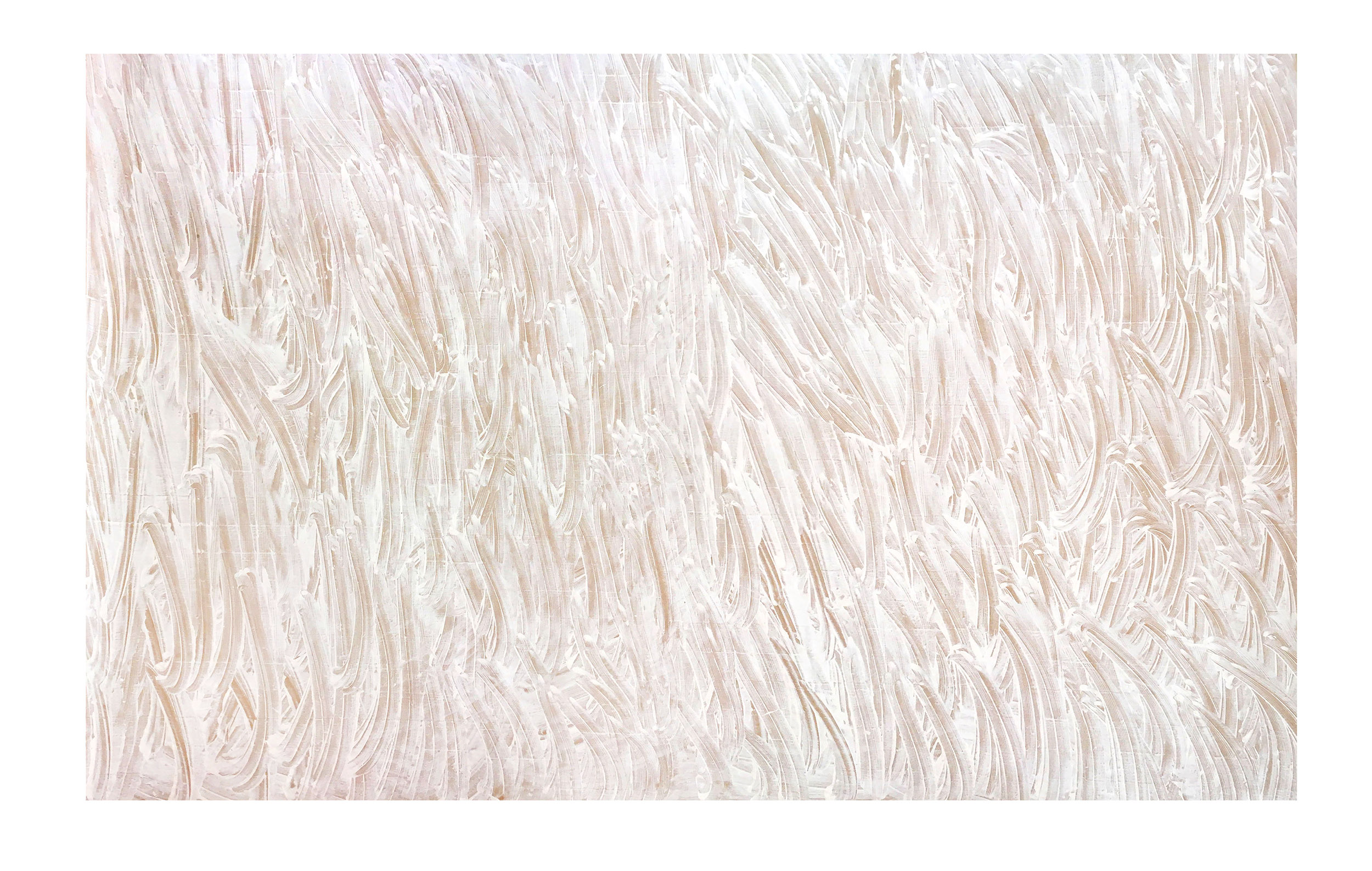
Acrylique sur kraft : 130 x 200 cm
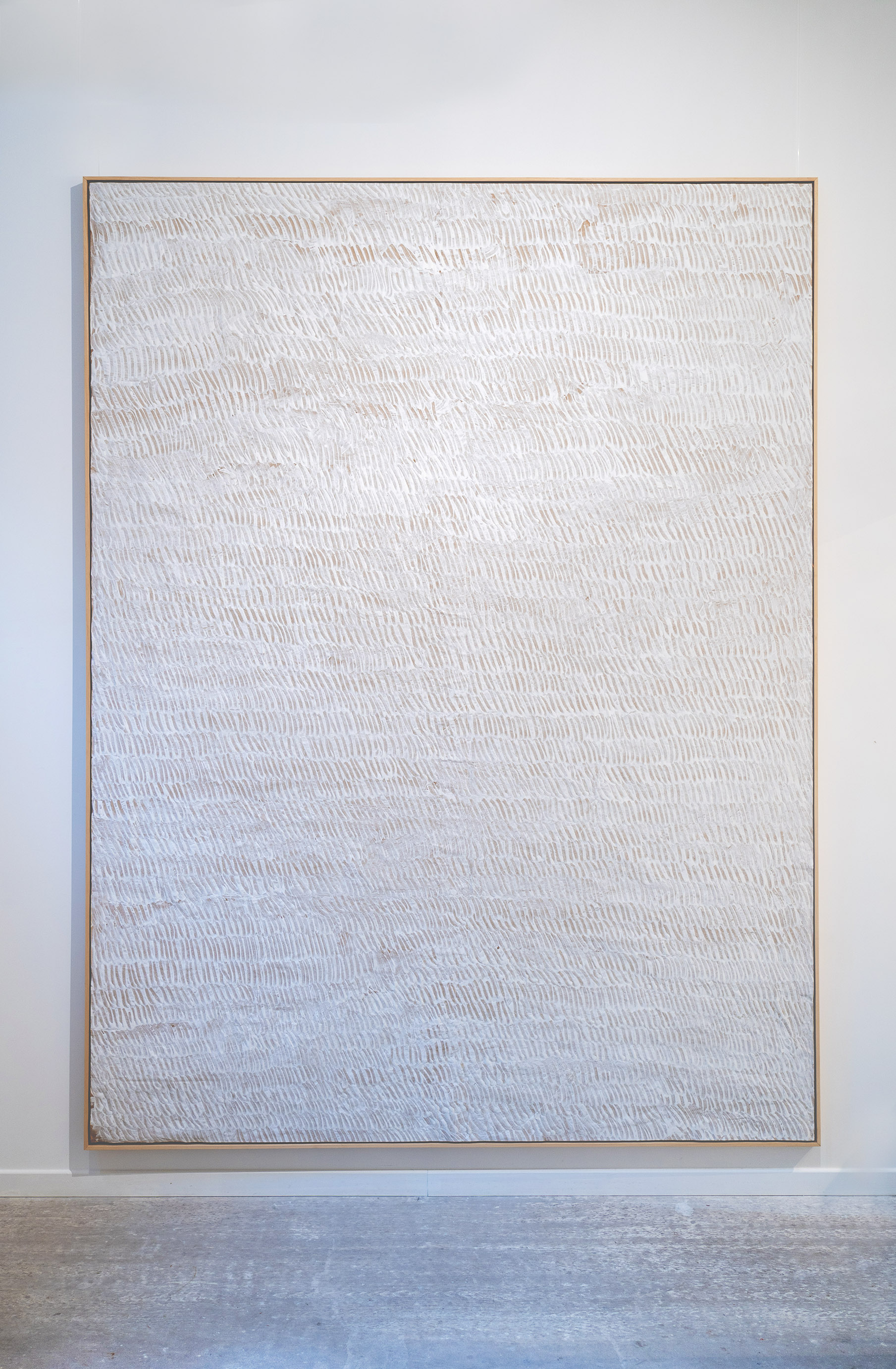
Acrylique sur kraft : 265 x 195 cm

Acrylique sur kraft : 200 x 200 cm
Sténopé
Il est ici question de révéler une image latente du mouvement en jouant sur le passage de l’empreinteà la trace. Ce travail sur la soustraction fait écho au procédé dit « Sténopé » permettant d’obtenir un négatif de l’image photographique.
Sur une toile industrielle posée au sol, le peintre restitue un mouvement organique à la peinture blanche. La pulpe du doigt trace un enchevêtrement de lignes, un courant se dessine peu à peu au contact de la toile. Une discussion s’installe entre la pression du doigt et le matériau. En se figeant, la peinture imprègne la toile et y laisse une empreinte. Puis, sous l’effet des vibrations impulsées par le peintre, la peinture se retire : l’empreinte devient une trace, le fond émerge, la toile trouve son mouvement. Ainsi, l’effacement participe autant que le trait au rythme de l'œuvre. Enfin, ce rythme est soutenu par une partition en neuf panneaux contenant le paysage.
The aim in this series is to reveal a latent image of movement by playing on the transition from imprint to trace. This work on subtraction echoes the "pinhole" process used to obtain a negative of the photographic image. On an industrial canvas laid on the floor, the painter creates an organic movement in white paint. His fingertips trace a mesh of lines, and a flow gradually takes shape upon contact with the canvas.
A dialogue develops between the pressure of the finger and the material. By settling, the paint impregnates the canvas, leaving an imprint. Then, under the effect of the vibrations generated by the painter, the paint withdraws: the imprint becomes a trace, the background appears, the canvas finds its movement. In this way, removal plays as much a part in the rhythm of the work as the line.
 Acrylique sur toile industrielle : 9x 140 x 61 cm, image © EL
 Vue de détail, image © EL
Acrylique sur toile industrielle : 300 x 150 cm

Vue d’atelier
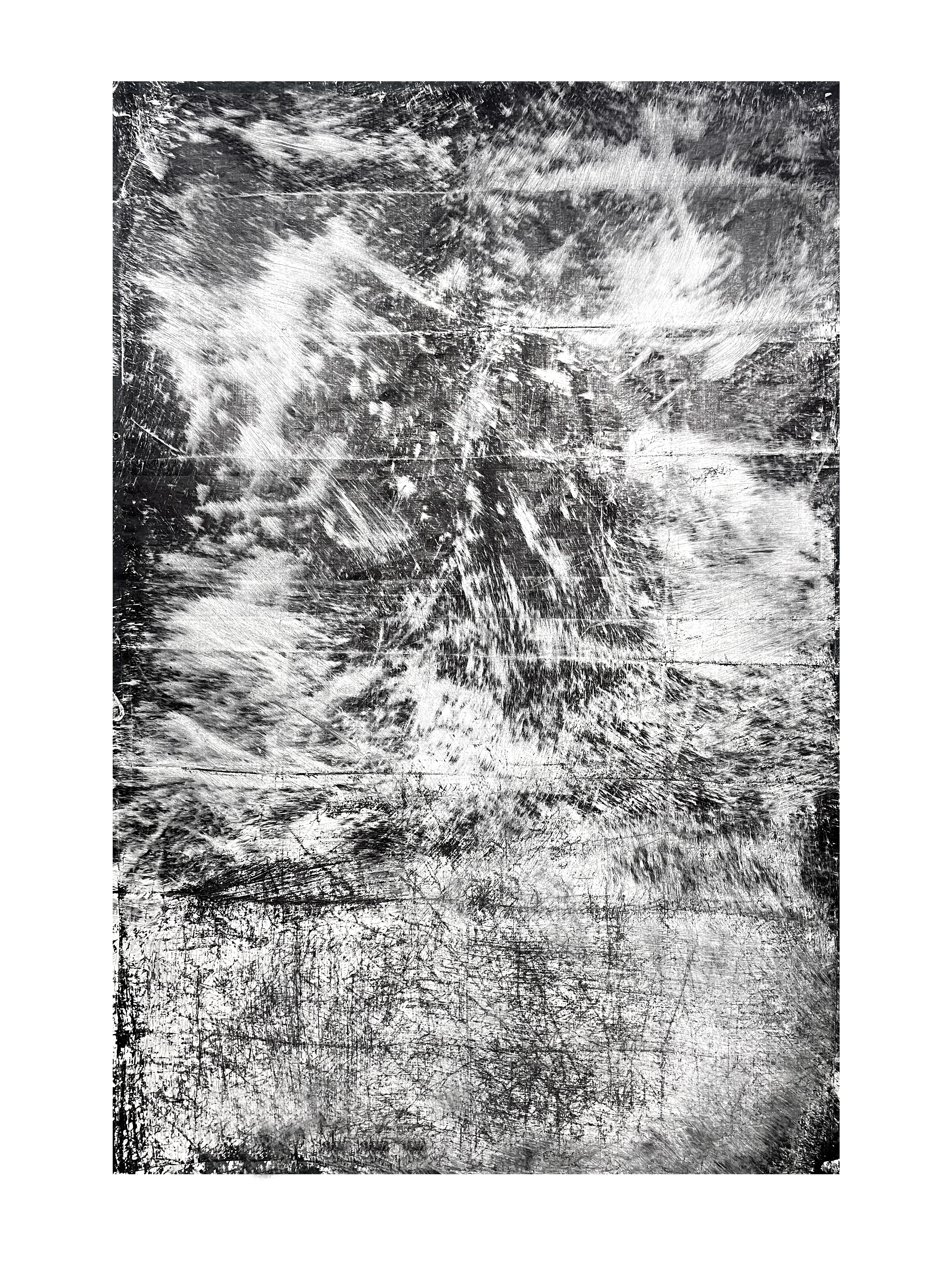
Acrylique sur toile industrielle : 300 x 200 cm
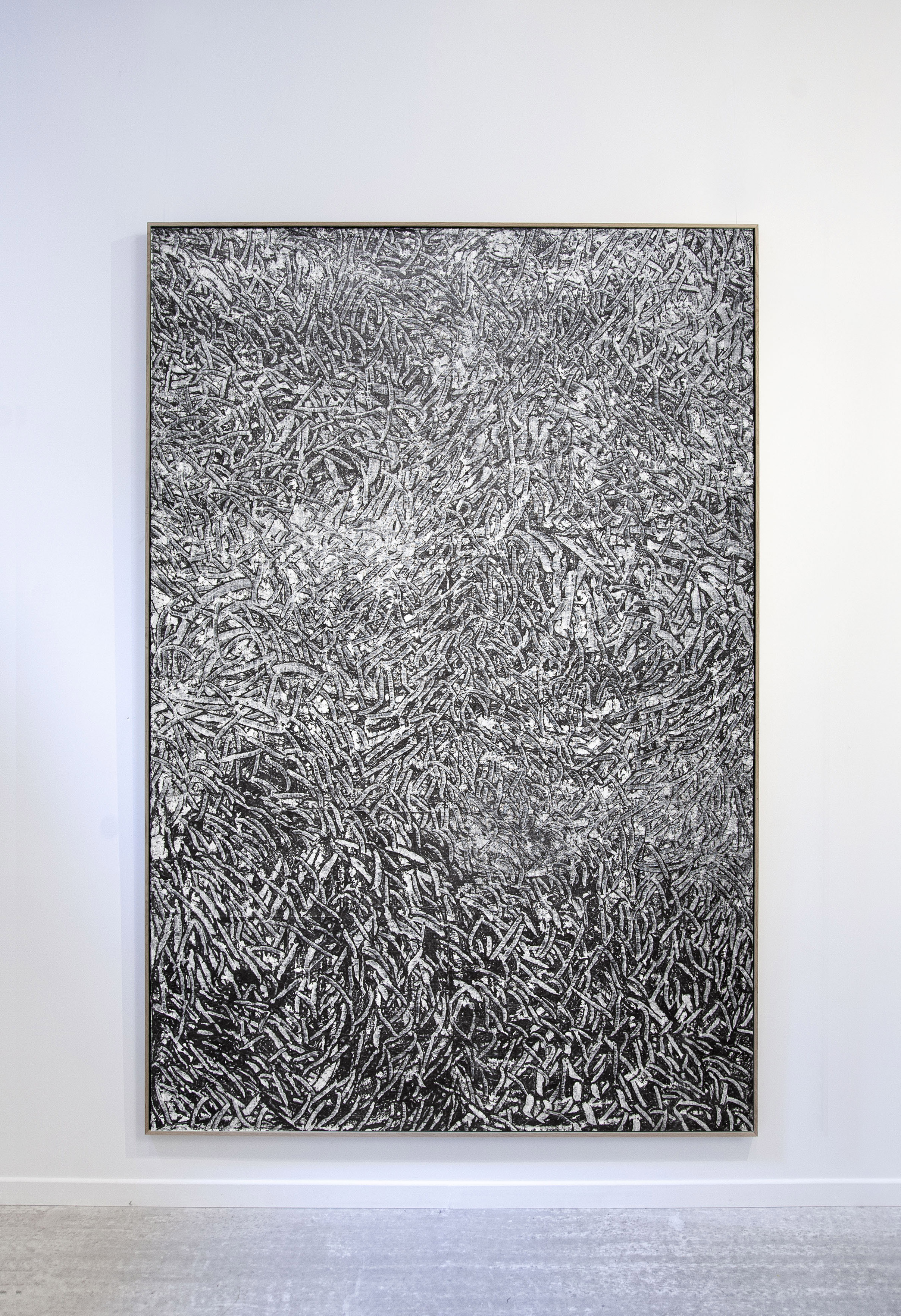
Acrylique sur toile industrielle : 290 x 200 cm

Acrylique sur toile industrielle : 200 x 300 cm